Some memories don’t live in photographs. They live in the click of a telephone dial, the rustle of a shopping catalog, and the satisfying sound of a stamp pressed into a savings booklet. For many baby boomers, these little rituals were part of ordinary American life. Today, they feel like postcards from another world.
According to the U.S. Census Bureau, baby boomers were born between 1946 and 1964. The country’s population aged 65 and older grew by 34.2% between 2010 and 2019. As this generation ages, the everyday objects and routines of its past offer a fascinating glimpse into how American life has changed.
Of course, not every boomer experienced the same things, and some younger Americans remember them, too. Still, these 12 experiences show how much has changed, from grocery shopping and household routines to entertainment and communication.
Turning a Rotary Phone Dial for Every Number
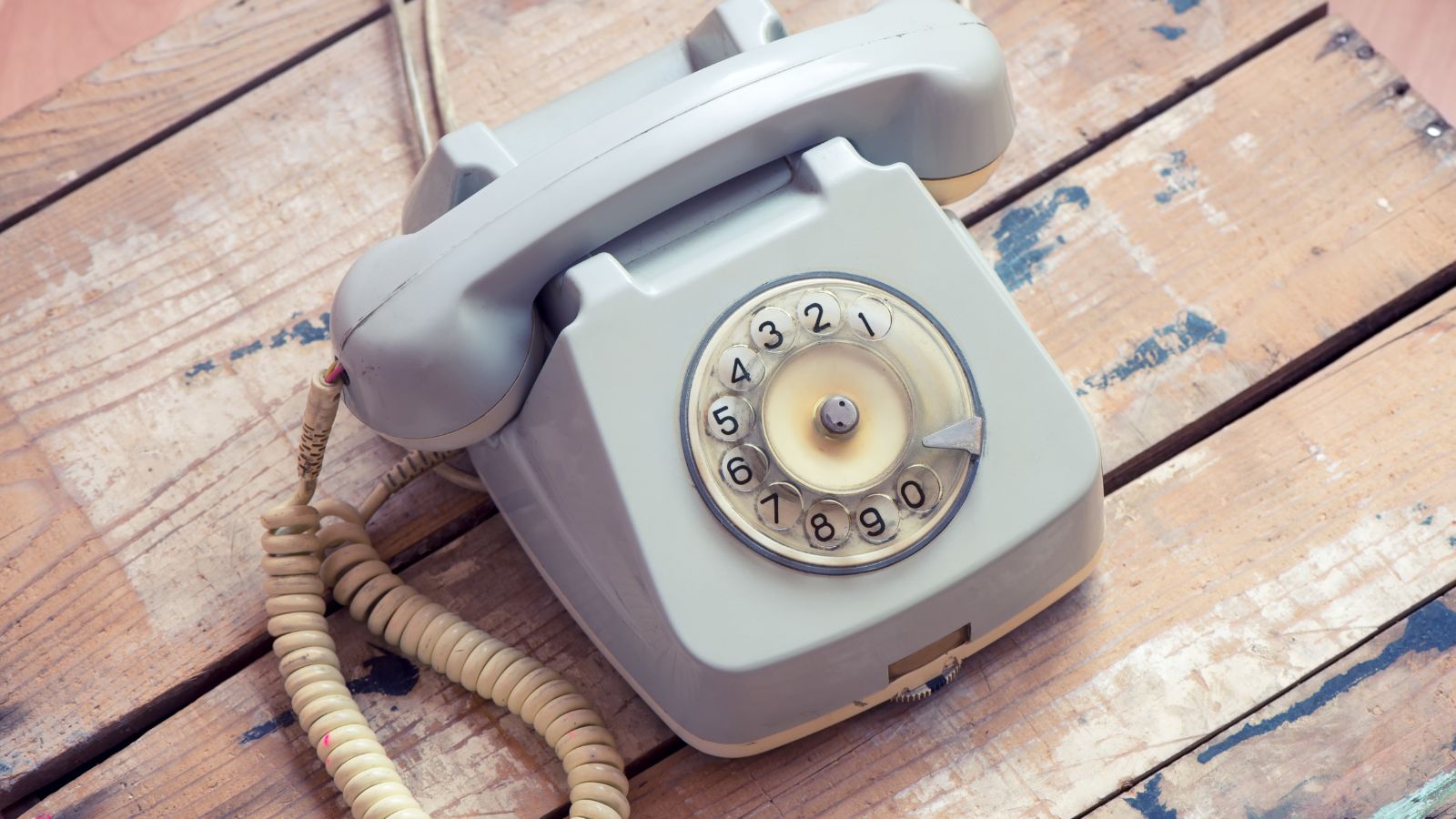
Before smartphones made calling effortless, making a phone call required a little patience. You placed your finger into a numbered hole, turned the dial, released it, and repeated the process until the entire number was entered.
According to the Museum of Florida History, the Western Electric Model 500 was a popular standard desk telephone from 1950 to 1984.
Something wonderfully deliberate about the process. Every digit demanded attention, and dialing the wrong number could mean starting again. A phone call wasn’t simply a tap on a screen. It was a small ritual of turning, clicking, and waiting.
Sharing a Telephone Line With the Neighbors
Privacy wasn’t always guaranteed when the telephone rang. Some households shared a single telephone line with several neighbors, creating an arrangement that could make private conversations surprisingly public.
The National Park Service preserves an oral history from Willis and Ronnie Meyers describing a telephone line shared by as many as 12 households.
Someone picking up the receiver could discover another conversation already underway. Making a call sometimes meant waiting for someone else to finish.
For people accustomed to having their own phones, the idea of sharing one line among 12 households sounds almost unbelievable. Yet it was a real part of life in some communities.
Searching Library Card Catalogs by Hand
Finding a book once involved opening wooden drawers and flipping through rows of carefully organized cards.
The Library of Congress reports that its historic card catalog eventually contained more than 22 million cards across 22,000 drawers. The last card was added in 1980.
Each little card offered clues to finding a particular book. Readers searched by author, subject, or title, following a paper trail toward the shelves.
No instant search bar could rescue a forgotten title. Instead, the process rewarded patience and curiosity. Even today, the Library of Congress preserves its card catalog as a valuable research resource.
Watching Television Before Digital Broadcasting
Television once came with a different kind of anticipation. Reception depended on broadcast signals, and analog television was part of everyday American entertainment for decades.
That era changed significantly on June 12, 2009, when full-power American television stations completed their transition away from analog broadcasting.
The Federal Communications Commission documents the transition, although low-power and translator stations had a later deadline of July 13, 2021.
Plenty of younger Americans remember analog television, too. Still, the broadcasting system that accompanied so many family evenings eventually gave way to a new technological chapter.
Choosing Leaded Gasoline at the Pump
A trip to the gas station once offered a choice that has largely disappeared from ordinary road travel.
The Environmental Protection Agency confirms that the sale of leaded gasoline for on-road vehicles was banned effective January 1, 1996.
That decision followed a lengthy transition, not a sudden nationwide switch. The EPA’s 1996 announcement described the conclusion of a 25-year phaseout effort.
Not every boomer owned a vehicle that required leaded gasoline. Nevertheless, those who remember seeing that choice at service stations witnessed a significant change in American motoring.
Taking Family Photographs on Kodachrome
Family celebrations once carried the excitement of capturing moments on film. For many photography enthusiasts, Kodachrome was a familiar name associated with colorful memories.
Kodak’s official history records that it retired Kodachrome in 2009, ending a remarkable 74-year production run.
The story continued briefly after manufacturing stopped. CBS News reported on December 26, 2010, that the remaining processing service was nearing its end.
A photograph could preserve a birthday, a family gathering, or an ordinary afternoon. Yet the particular film that held those memories eventually became part of photography history.
Flying When Passengers Could Smoke on Airplanes
Air travel once included an experience that would seem unfamiliar to many passengers today: smoking was permitted on certain flights.
On April 23, 1988, a federal restriction took effect prohibiting smoking on scheduled domestic airline flights lasting two hours or less.
The original regulation, preserved by the U.S. Department of Transportation, did not immediately prohibit smoking on every flight.
The change happened in stages. For travelers who remember the earlier era, it marks another example of how an ordinary experience can become history.
Collecting S&H Green Stamps After Shopping
For some families, grocery shopping came with an extra reward: little green stamps waiting to be collected.
Instead of receiving digital loyalty points, shoppers saved S&H Green Stamps, pasted them into booklets, and redeemed completed collections for merchandise.
The Historic New England collection preserves a 1965 saver booklet containing 24 pages, including an example advertising a participating New Hampshire grocery store.
The stamps were such a familiar cultural symbol that Andy Warhol featured them in a 1962 artwork, now documented by the Spencer Museum of Art.
There was a particular satisfaction in filling those pages. Every stamp brought the promised reward a little closer.
Typing on an IBM Selectric Typewriter
Before computer keyboards became commonplace, producing a polished document could involve the rhythmic clatter of a typewriter.
IBM introduced its famous Selectric on July 31, 1961. Unlike traditional typewriters with individual type bars, it used a rotating spherical typing element commonly compared to a golf ball.
According to IBM’s historical account, the original machine offered six interchangeable typefaces.
Changing a document’s appearance meant swapping physical components rather than selecting a font from a menu.
The Selectric brought a distinctive rhythm to offices and typing desks, reminding us that even ordinary paperwork once had a mechanical soundtrack.
Browsing the Sears Catalog for Household Treasures
Long before online shopping carts, a thick catalog could turn an ordinary afternoon into a shopping adventure.
Sears distributed its first general-merchandise catalog in 1894. Over the following decades, its pages offered everything from clothing and household goods to home equipment.
According to the University of Chicago Library, a dedicated Chicago printing facility built in 1948 produced two yearly Sears catalogs with a combined print run of seven million copies.
The famous general-merchandise “Big Book” was discontinued in 1993, although Sears continued producing specialty catalogs.
For households that relied on its pages, browsing was part shopping, part dreaming, and part family tradition.
Mailing a Letter for Just 3 or 4 Cents
There was a time when sending a personal letter cost only a handful of pennies.
The U.S. Postal Service’s historical rate records show that mailing a one-ounce domestic letter cost 3 cents beginning July 6, 1932. The rate increased to 4 cents on August 1, 1958, and then to 5 cents in January 1963.
Those changing prices mean different boomers remember different postage rates.
Yet the experience behind the numbers remains familiar: writing a note, addressing an envelope, attaching a stamp, and sending words across the country. The small cost was part of a much bigger human connection.
Receiving Netflix DVDs in Red Envelopes
Not every memorable boomer experience belongs to childhood. Some came much later, including the days when movie night began at the mailbox.
Netflix delivered its first DVD in 1998, introducing a rental experience built around discs arriving through the mail.
On September 29, 2023, the company announced it had shipped its final DVDs, ending its 25-year mail-rental era.
In its official farewell announcement, Netflix reflected on the familiar red envelopes that had accompanied movie nights across America.
Boomers shared this experience with younger generations, but its disappearance still marked the end of a recognizable household tradition.
The Little Rituals That Made Everyday Life Memorable
What makes these experiences special isn’t simply their age. It’s the ordinary moments they represent.
The Sears Big Book disappeared in 1993, Kodachrome retired in 2009, and Netflix mailed its final DVDs in 2023. Each change quietly closed another chapter of familiar American life.
Yet memories don’t disappear when technology moves forward. They remain tucked inside family stories, old photographs, kitchen drawers, and conversations that begin with a smile.
Perhaps that’s the magic of nostalgia. Sometimes the smallest routines leave the longest-lasting memories.