Some of America’s most memorable dishes have never won beauty contests. They’re gray, wobbly, oddly shaped, or covered in ingredients that seem unlikely to belong together. Yet beneath those unusual appearances lie generations of kitchen creativity and cherished regional traditions.
Take scrapple, which Habbersett has produced since 1863, or Cincinnati’s goetta, a German-American specialty that Glier’s has made since 1946. These foods have endured long after countless culinary fashions disappeared.
From bread baked inside a can to a bright red gelatin salad, these six old-fashioned favorites have stories worth discovering. And once you understand what goes into them, their unusual appearances might become part of their charm.
Scrapple: The gray loaf with a crispy secret
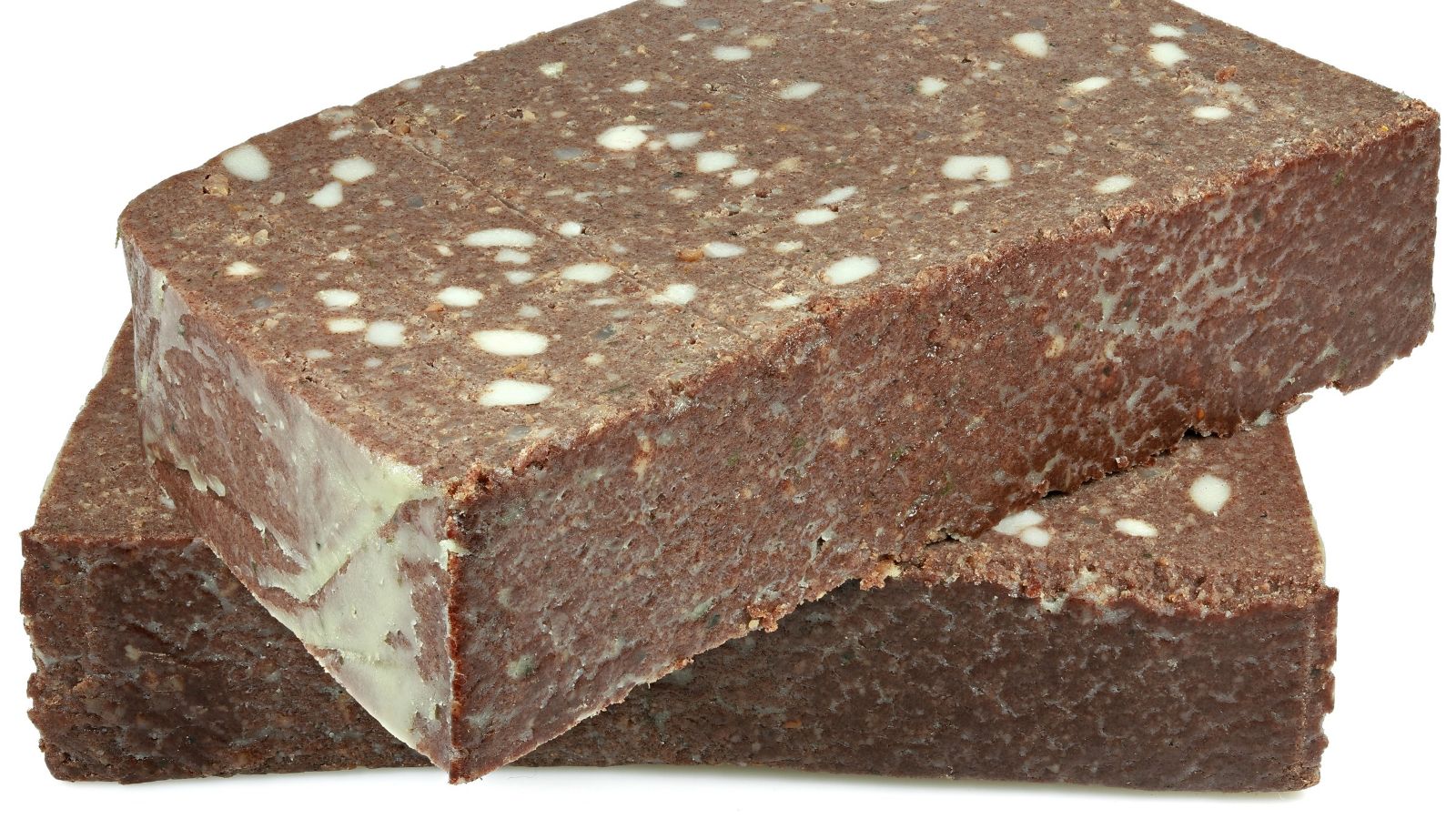
At first glance, scrapple looks like an unassuming block of grayish meat. Nothing about its appearance immediately suggests a delicious breakfast, but frying changes the story.
According to Habbersett’s official ingredient list, its Original Scrapple combines pork broth, pork, pork skins, yellow cornmeal, wheat flour, pork hearts, pork livers, salt, and spices.
The company, established in Pennsylvania in 1863, recommends cutting the loaf into slices between ¼ and ½ inch thick before browning them in a skillet. That’s when the transformation happens.
Writing for The Philadelphia Inquirer, Kae Lani Palmisano described fried scrapple as having a crisp exterior surrounding a smooth, slightly gritty, meaty center.
That contrast explains much of its appeal. What begins as a rather plain loaf emerges from the frying pan with golden edges and a completely different personality.
Of course, recipes vary, but scrapple proves that appearances rarely tell the whole culinary story.
Goetta: Cincinnati’s unusual meat-and-oat creation
Oatmeal and sausage might sound like two breakfast favorites that accidentally wandered into the same mixing bowl. In Cincinnati, however, that combination has become a regional tradition.
Glier’s Original Goetta contains pork, beef, steel-cut oats, broth, onions, spices, pork hearts, and pork skins. The steel-cut oats distinguish goetta from conventional sausage, helping create its characteristic texture.
Glier’s traces its business to 1946, when Robert Glier established a butcher shop in Covington, Kentucky. The company links the dish to German-American cooking traditions already present in the region.
Preparation makes all the difference. Glier’s recommends slicing its goetta into half-inch patties and browning them in a skillet until both sides become golden and crisp.
The result, according to the company, combines a browned exterior with a softer, sometimes creamy middle.
It’s an old-fashioned breakfast specialty that turns two familiar ingredients, meat and oats, into something wonderfully distinctive.
Headcheese: The cold cut that isn’t cheese
Few old-fashioned foods have names as misleading as headcheese.
Despite what you might expect, this traditional meat preparation has nothing to do with cheddar, mozzarella, or cream cheese.
Usinger’s German Brand Headcheese contains pork snouts, pork tongues, water, salt, and seasonings. Its ingredient information contains no dairy cheese.
The Milwaukee sausage maker, whose history dates to 1880, describes its German-style version as coarsely cut and heavily smoked, with larger pieces of meat giving it a distinctive appearance.
That presentation might surprise someone expecting an ordinary deli meat.
But the appeal becomes easier to understand if you think of headcheese as a traditional cold cut rather than something resembling cheese.
Usinger’s version emphasizes its smoky preparation, while other producers use different ingredients and seasonings.
It’s a reminder that some unusual food names preserve old culinary traditions rather than accurately describing what appears on your plate.
Tomato aspic: The savory gelatin that jiggles
Tomatoes usually end up in soups, sauces, and salads. Tomato aspic takes a different path, transforming familiar ingredients into a shimmering, ruby-red mold.
According to Southern Living’s tomato aspic recipe, the dish combines tomato juice, unflavored gelatin, onion, lemon juice, Worcestershire sauce, and assorted seasonings.
Pour the mixture into a decorative mold and refrigerate until firm. Southern Living’s recipe calls for approximately six hours of chilling.
Although gelatin preparations have a much longer history, molded tomato salads became fashionable during the mid-20th century.
They appeared at luncheons, dinner parties, and elaborate buffets, sometimes accompanied by olives, celery, or savory salad fillings.
The surprising part is the flavor. Southern Living describes its version as tomato-forward and refreshing, with seasonings providing savory complexity rather than dessert-like sweetness.
So while tomato aspic might resemble a fruit gelatin dessert, its character belongs firmly on the savory side of the table.
Canned brown bread: The loaf that comes out of a tin
Bread usually arrives in recognizable shapes, from crusty rounds to neatly sliced rectangles. New England’s canned brown bread breaks that familiar pattern with a cylindrical loaf.
B&M’s plain brown bread contains whole-wheat flour, molasses, whole-grain rye flour, cornmeal, whey, and buttermilk, among other ingredients.
But its preparation is the real surprise. According to B&M’s manufacturing explanation, bread batter goes directly into cans, which are then steam-cooked for three hours.
The cans remain partially unsealed during cooking, allowing the bread to rise before they’re completely sealed.
B&M told TODAY that it began producing canned bread in 1928. In her TODAY feature, writer Terri Peters described the bread as dense, while food writer Amy Traverso Wells highlighted its distinctive molasses aroma and flavor.
Traditionally paired with baked beans in New England, canned brown bread demonstrates that even an unusual package can hold a familiar, comforting food.
Ambrosia salad: The colorful dessert pretending to be salad
Fruit, coconut, marshmallows, and creamy dressing might seem like an unlikely combination. Yet ambrosia salad has occupied a special place in Southern food traditions for generations.
According to Southern Living’s history of ambrosia, early recipes appeared in cookbooks during the late 19th century.
The original preparation was surprisingly simple, typically combining citrus fruit, sugar, and coconut. Later versions became considerably more elaborate.
Pineapple, maraschino cherries, marshmallows, whipped cream, sour cream, and other creamy ingredients found their way into different interpretations.
Even the choice of coconut inspired debate. Southern Living cites a 1930 cookbook favoring freshly prepared coconut, while James Beard’s 1949 cookbook recommended moist canned coconut.
Today, an elaborate ambrosia can resemble a fluffy fruit dessert more than a conventional salad.
Yet the contrast between bright citrus, coconut, and creamy ingredients helps explain why the dish still inspires different family recipes.
Sometimes, the most memorable recipes refuse to fit neatly into any category.
The final bite
From Pennsylvania’s crispy scrapple to the colorful extravagance of Southern ambrosia, these six old-fashioned foods demonstrate how adventurous earlier generations could be in the kitchen.
Their appearances might raise eyebrows, but their ingredients, preparation methods, and regional histories reveal something more interesting than their looks suggest.
Not every dish will appeal to every palate, and that’s part of the adventure. What tastes wonderful to one family might seem completely unfamiliar to another.
Still, the next time an unusual old-fashioned recipe catches your attention, consider giving it a closer look. Sometimes, the dishes that look the strangest have the most interesting stories to tell.