South Korean shoppers are changing how they buy groceries, and warehouse retailers are cashing in. With food prices squeezing household budgets, more consumers are turning to bulk purchases, hoping larger quantities will lower their overall spending.
The shift has pushed estimated spending at two major warehouse chains to a record 1.45 trillion won, about $1.1 billion, in September 2026 alone, according to market research firm WiseApp Retail, which released the figures on October 20. The figures highlight how rising living costs are influencing everyday shopping decisions across South Korea.
Warehouse Shopping Reaches a New Record
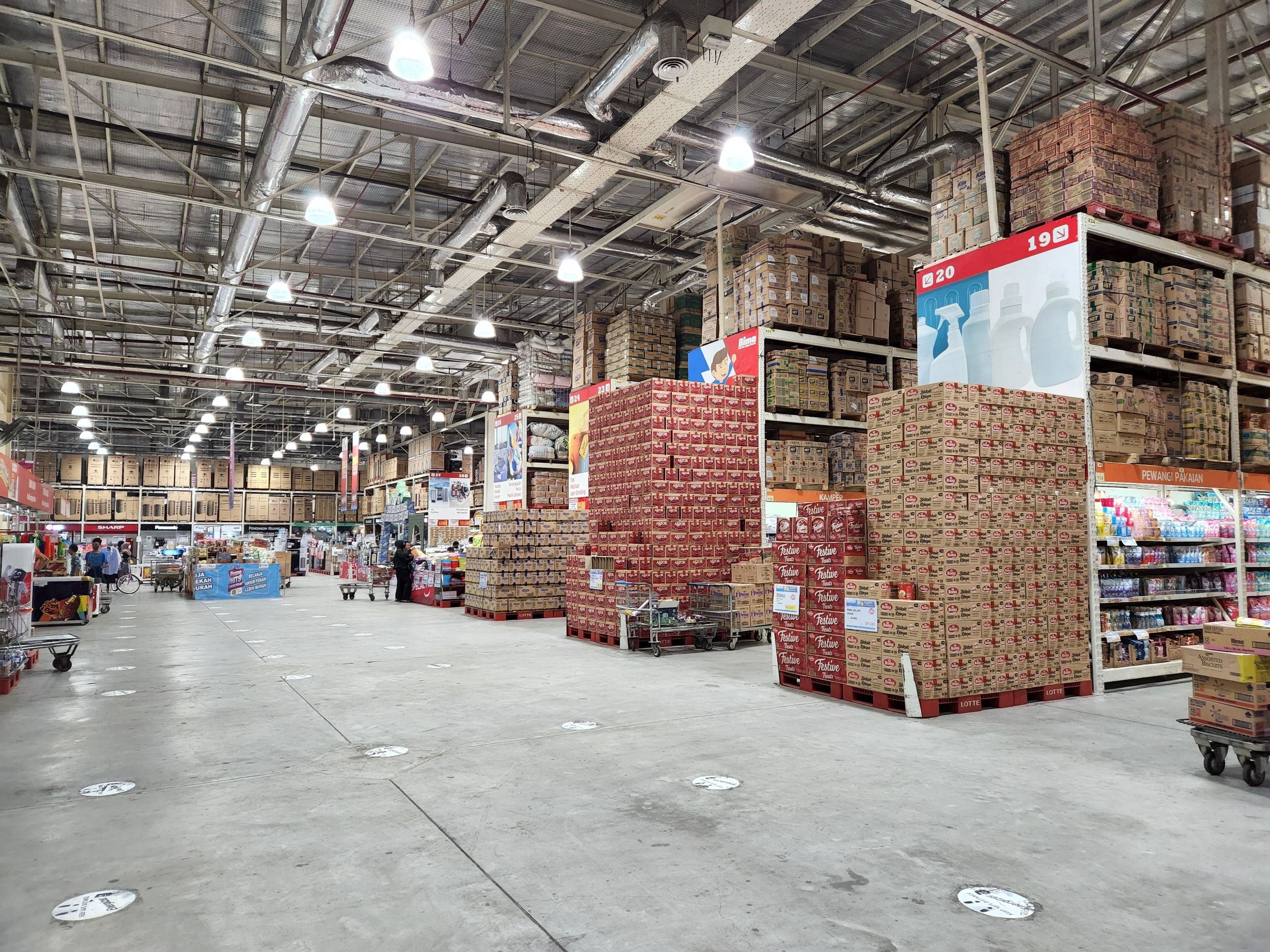
Warehouse retailers Costco and Emart Traders are emerging as major beneficiaries of South Korea’s growing appetite for value shopping.
WiseApp Retail reported that estimated combined card payments at the two retailers reached 1.45 trillion won in September, the highest monthly total since its tracking began.
Both chains also recorded their highest individual estimated payment totals, suggesting that the trend extends beyond a single retailer.
However, the figure represents estimated consumer payments rather than confirmed company revenue. The analysis uses sampled credit and debit card transactions and excludes cash, bank transfers,, and some other payment channels.
Even with those limitations, the record clearly indicates the growing importance of warehouse retailers in South Korea’s competitive grocery market.
Families Are Rethinking Their Grocery Shopping Habits
For many households, the appeal of bulk shopping comes down to simple arithmetic. Buying larger packages can sometimes lower the cost per item, even when the total checkout bill is higher.
A Seoul mother of two, Kim Eun-young, told The Korea Times that she had made monthly trips to Costco part of her household routine.
Previously, the 42-year-old relied on a nearby supermarket for everyday groceries. As prices increased, however, she began purchasing food and household essentials in larger quantities.
She explained that the approach appeared more economical for her family of four. Instead of buying small packages repeatedly, she buys frequently used products and portions food for storage.
Her experience illustrates the trade-off many budget-conscious shoppers face. Paying more during a single grocery trip can make financial sense when the products last longer and cost less per unit.
Still, savings depend on whether households actually use everything they purchase.
Related Post:10 Grocery Items Americans Are Cutting Back On Due to Inflation
Why Warehouse Stores Can Offer Lower Prices
Warehouse retailers’ popularity is closely tied to how they operate.
Unlike conventional supermarkets, which may carry many brands and package sizes, warehouse stores typically focus on a smaller selection of products bought in bulk.
Large orders can give retailers greater purchasing power when negotiating with suppliers. Fewer product variations can also simplify inventory management.
Warehouse stores often keep merchandise in shipping boxes or on pallets, reducing the handling and display costs associated with traditional supermarket shelves.
Another important factor is package size. Products sold in larger quantities may cost less per unit, making them attractive to households that regularly buy the same groceries.
These efficiencies help retailers compete on price without relying entirely on temporary discounts.
The business model is especially appealing when consumers pay closer attention to the cost of everyday essentials.
Private-Label Products Are Helping Keep Costs Down
Private-label brands have become another important part of the warehouse shopping strategy.
Costco’s Kirkland Signature brand covers a broad selection of products, including groceries, clothing, and household essentials. By participating in product development and managing manufacturing relationships, the retailer can control certain costs while maintaining its product standards.
Emart Traders follows a similar approach with its T Standard brand.
The company works directly with manufacturers from early product planning through the final launch. This arrangement can reduce spending on marketing, design, and distribution.
For shoppers, the appeal is finding everyday products at competitive prices without paying extra for a familiar national brand.
Private labels also give retailers more control over product offerings and pricing, an advantage in a market where consumers increasingly compare grocery costs before making purchases.
Costco Korea Reports Strong Revenue Growth
The shift toward warehouse shopping is also reflected in Costco’s financial performance.
Costco Korea reported revenue of 7.32 trillion won for its 2025 fiscal year, which ended in August 2025. That represented a 12.1% increase from the previous year and a record for the business.
The growth becomes more noticeable when compared with earlier results.
Costco Korea generated 6.07 trillion won in fiscal 2023, followed by 6.53 trillion won in fiscal 2024.
These figures show consistent growth across three financial years, even as shoppers faced pressure from rising living costs.
Although the financial results cover a period before September 2026’s record card spending, they show how warehouse retailing has strengthened its position in South Korea.
Emart Traders Is Also Seeing Higher Sales and Profits
Costco is not the only warehouse operator benefiting from changing consumer behavior.
Emart Traders reported annual gross sales of 3.85 trillion won in 2025, compared with 3.37 trillion won in 2023.
That represents about 14.2% growth over two years.
Operating profit increased even faster, climbing from 58.1 billion won in 2023 to 129.3 billion won in 2025.
The improvement suggests the warehouse chain has expanded its business while strengthening profitability.
Both Costco and Traders now have financial results that reinforce the September spending figures.
For traditional supermarkets and other retailers, warehouse chains’ success poses a challenge: customers are increasingly willing to change their shopping routines when they believe another store offers better value.
Grocery Shoppers Are Making Fewer Trips
South Korea’s changing shopping patterns extend beyond warehouse retailers.
An August 2026 Worldpanel report by Numerator found that consumers bought fast-moving consumer goods less often during the first six months of the year.
Shopping frequency declined by 2.8%, while spending per trip increased by 1.5%.
Meanwhile, average household spending on these products fell by 1.3%.
Food spending dropped 2.2%, contributing to the broader slowdown.
The findings were based on purchasing information from 8,000 South Korean households, excluding fresh food.
These figures suggest that households are becoming more selective about when and where they shop.
Instead of making frequent purchases, some consumers are concentrating more of their spending into individual shopping trips. Others are using different retailers depending on the products they need.
That behavior provides a broader context for the growing popularity of warehouse stores.
Rising Food Costs Are Putting Pressure on Households
The shift toward bargain hunting comes as South Korean households continue dealing with expensive groceries.
Ahead of the September Chuseok holiday, shoppers were already adjusting their purchases to manage food expenses.
A survey by the Korea Price Research Center found that a traditional holiday table with 28 items averaged 303,750 won in six major cities.
That was 4% higher than the previous year and 26% above the comparable figure from 2020.
Some shoppers responded by choosing imported meat, less expensive cuts or smaller portions.
The trend highlights a key difference in household budgeting strategies.
While larger families may find bulk packages economical, smaller households sometimes prefer buying only what they need, even if the price per unit is higher.
Both approaches reflect the same concern: keeping the total grocery bill manageable.
What South Korea’s Bulk-Buying Boom Means for Retailers
September’s record spending highlights a major shift in South Korea’s retail industry.
Consumers are not necessarily abandoning supermarkets or convenience stores. Instead, they are becoming more strategic about which stores they visit and what they purchase at each location.
Warehouse chains are attracting shoppers who can afford larger upfront purchases and have enough storage space to make bulk buying practical.
Traditional supermarkets, meanwhile, must continue serving customers who prefer smaller quantities, greater product variety and convenient shopping locations.
For American consumers familiar with warehouse clubs, South Korea’s experience offers a recognizable lesson: bigger packages can offer better value, but only when shoppers compare unit prices and avoid buying more than they can use.
The latest figures show that price-conscious shopping is becoming a powerful force in South Korea’s retail market.
With grocery costs remaining a concern, warehouse retailers appear well-positioned to compete for households looking to make every shopping trip count.
Posts You Might Like:
7 Alarming Ways Rising Costs Are Shrinking the American Grocery Cart