At one time, American fast food felt a little closer to home. Regional burger chains had their own personalities, from barn-shaped roadside restaurants to family meals that came with toys and collectible glasses.
Some grew into major operations, while others gradually disappeared as bigger competitors took over. If you remember these six names, you have a glimpse of a more local chapter in American dining.
Red Barn
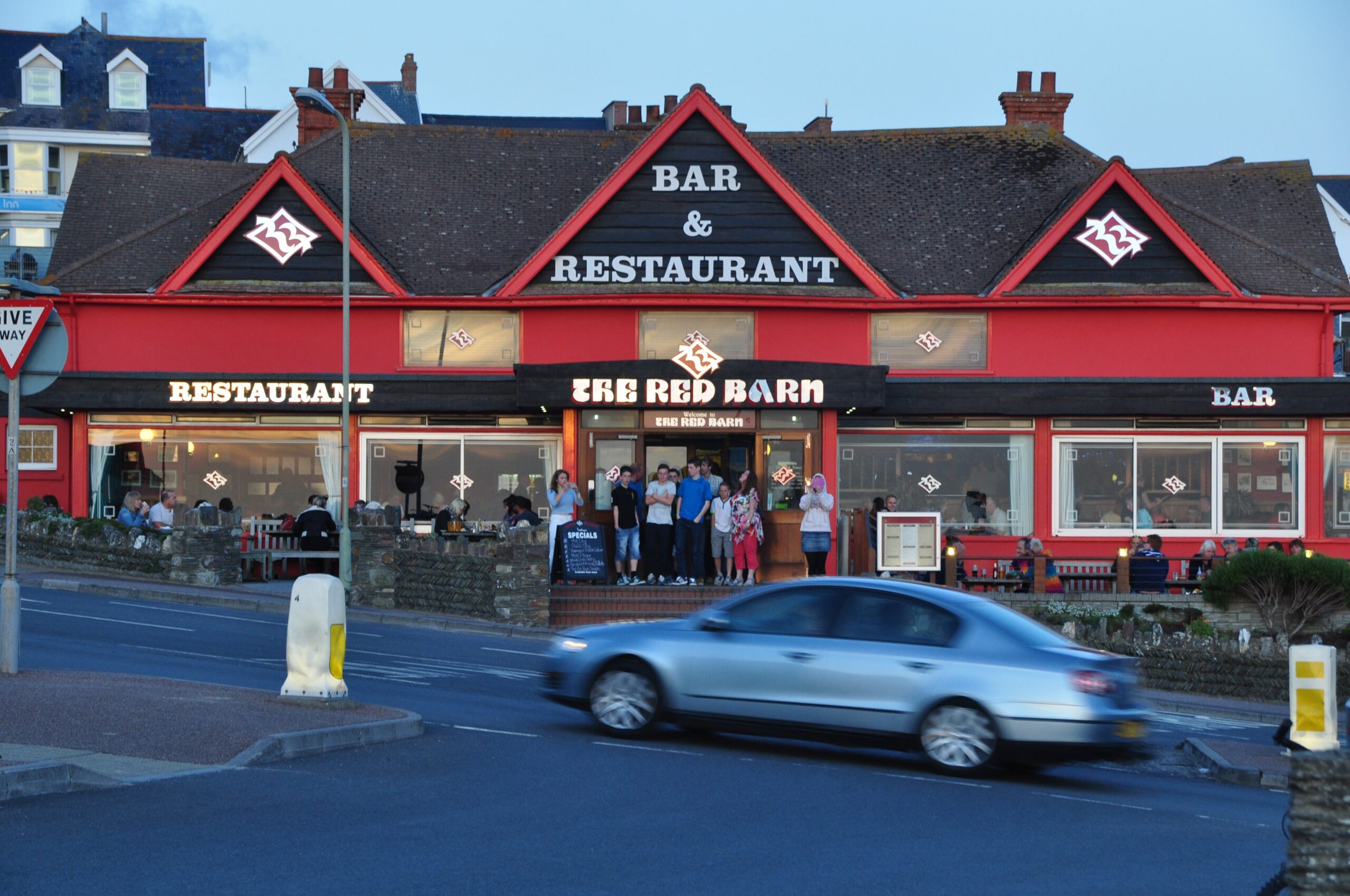
Woolacombe : The Red Barn by Lewis Clarke, CC BY-SA 2.0, via Wikimedia Commons
Red Barn brought a little theatre to the roadside burger stop. Founded in the early 1960s in Springfield, Ohio, the chain became known for its barn-shaped buildings, making its restaurants easy to recognize before customers even reached the menu.
Inside, the offerings went beyond hamburgers to include the Barnbuster, fried chicken, fish sandwiches, fries, and milkshakes. That variety gave the chain a broader appeal than a burger-only operation.
Red Barn eventually grew to about 400 locations, but ownership changes and financial difficulties weakened its position. By the late 1980s, most of its restaurants had disappeared, with 1988 commonly cited as the chain’s approximate end.
Its appeal today is easy to understand: the buildings gave the brand a visual identity that a standard roadside restaurant could never quite match. The food was familiar, but the setting made the experience distinctive.
Burger Chef
Founded in Indianapolis in 1957, Burger Chef became a major name in American fast food, with about 1,200 locations by 1972.
Its menu featured the Big Chef, Double Big Chef, cheeseburgers, fries, and milkshakes, but its most memorable contribution may have been the Funmeal, which combined a burger, fries, a drink, dessert, and a toy for children. That all-in-one experience helped make the restaurant feel like more than a quick lunch stop.
The chain’s story eventually took a different turn. In 1982, General Foods sold 679 locations to Hardee’s for $44 million, and many restaurants changed their names. The last Burger Chef-branded location, in Cookeville, Tennessee, closed in 1996.
Today, the Funmeal remains a particularly interesting reminder of how fast-food chains competed to make family visits memorable, not simply convenient.
Carrols
Carrols began in 1960 and built a following across western New York and Pennsylvania. At its peak during the 1960s, the chain had about 150 stores.
Customers could find burgers, fries, shakes and the Club Burger, while Looney Tunes drinking glasses gave the brand another way to stand out. It was a distinctly regional operation with its own identity, even as national competitors expanded their reach.
The familiar Carrols restaurant brand gradually vanished from the American landscape. Most locations became Burger King restaurants or closed, and the last American Carrols restaurant retired in 1981.
One important distinction, though: the company itself did not disappear. It continued as a major Burger King franchise operator and was acquired by Burger King’s parent company in 2024.
For anyone remembering Carrols, the restaurant name may be a relic, but the business story continued long after its original storefronts were gone.
Related: Grandma’s Old-Fashioned Recipes Are Making a Comeback, and These Are Worth Saving
Gino’s Hamburgers
Gino’s Hamburgers opened in Maryland in 1957 and grew into a substantial regional chain. Its menu brought together hamburgers, the Gino’s Giant, fried chicken, fries, and milkshakes. Rather than focusing exclusively on burgers, it offered customers a place where different fast-food favorites shared the same menu. By 1982, the business had reached 359 locations.
That same year, Marriott bought the chain and converted many of its restaurants into Roy Rogers locations. The last original Gino’s restaurant closed in 1986, although a revival under the Gino’s Burgers & Chicken name began around 2010.
This makes its disappearance less straightforward than a simple permanent farewell. Still, the original chain belongs to an era when regional restaurant names could build considerable followings before larger corporate operators reshaped the landscape.
Wimpy
Wimpy represents an earlier chapter in hamburger franchise history. Inspired by J. Wellington Wimpy, the burger-loving character from Popeye, the brand developed into one of the early hamburger-franchise concepts and expanded beyond the United States.
Its American restaurants offered the familiar combination of burgers and counter service, part of the growing fast-food culture that preceded the dominance of today’s biggest chains. In the United States, Wimpy gradually faded as larger national competitors took over more of the market. However, the name did not disappear worldwide.
Wimpy remains active in countries including the United Kingdom and South Africa, making it a surviving international brand rather than a completely defunct chain.
For American diners who remember its original presence, Wimpy reminds us that the fast-food landscape once included more competing names and more varied regional histories.
Dee’s Drive-In
Dee’s Drive-In, also known as Dee’s Hamburgers, represents the roadside restaurant tradition that helped shape American burger culture. Its remembered offerings included hamburgers, cheeseburgers, fries, and milkshakes, served in a drive-in format associated with the carhop era.
The appeal was not just the meal itself. It was the idea of stopping along the road, ordering familiar food, and enjoying a style of service tied to a particular place and time.
Unlike some of the larger chains on this list, Dee’s is less thoroughly documented in the available historical accounts. It is remembered as a regional American burger chain that eventually disappeared, but a more detailed timeline and precise account of its decline need further verification.
OTHER POSTS YOU MAY LIKE
Grandma’s Old-Fashioned Recipes Are Making a Comeback, and These Are Worth Saving
15 Old School Diner Foods That Are Disappearing From American Menus
The First Fast Food Chain to Sell a Billion Burgers Was Not McDonald’s. It Was White Castle.