President Donald Trump has answered Iran’s demand for war reparations with a sweeping compensation claim of his own, placing the deaths of American troops, decades of proxy attacks and thousands of Iranian protesters at the center of future negotiations.
Trump said on August 10 that Iran must compensate people it has “killed and gravely wounded” through roadside bombs and other conflicts. The demand followed Tehran’s insistence that the United States and Israel pay for damage caused during the continuing war. Trump said his proposal would become part of all future negotiations, turning a fragile diplomatic process into a fight over decades of bloodshed and billions of dollars.
The announcement lands nearly 6 months into a conflict that has already killed 18 U.S. service members, injured more than 500 American troops and cost U.S. taxpayers at least $37.5 billion. What began as a military confrontation over Iran’s nuclear program has expanded into a dispute involving shipping routes, sanctions, reparations and control of one of the world’s most important energy corridors.
Trump answers Iran’s demands with a bill of his own
Iran said it was moving closer to an agreement with Oman on new shipping lanes through the Strait of Hormuz. Tehran, however, tied a full reopening of the waterway to several U.S. concessions, including an end to sanctions and military threats, along with compensation for damage from American and Israeli attacks. Trump responded within 48 hours by turning Iran’s reparations argument against it.
“It is an interesting idea because now I am likewise demanding compensation from Iran, for all of the people that they have killed and gravely wounded with their roadside bombs and many conflicts,” Trump wrote on Truth Social, according to Reuters. His statement did not include a dollar amount, a payment deadline or a formula for calculating damages across more than 4 decades of confrontation.
The historical record gives the White House a long list of attacks to cite. The administration says Iran-backed militias killed at least 603 U.S. troops in Iraq between 2003 and 2011, amounting to roughly 1 in every 6 American combat deaths there. It also points to a 1996 truck bombing at Khobar Towers in Saudi Arabia that killed 19 U.S. airmen and wounded nearly 500 people.
More recent incidents have reinforced that argument. An Iranian ballistic missile attack on Iraq’s Ain al-Asad air base left 109 U.S. troops with traumatic brain injuries in 2020. Iran-backed militias later conducted more than 180 attacks against American forces between October 2023 and November 2024, killing 3 service members and wounding more than 180, according to a White House summary of Iran-linked violence.
One name in Trump’s demand requires important context.
Trump also connected his compensation proposal to the bombing of the USS Cole on October 12, 2000. That attack killed 17 U.S. sailors and injured more than 3 dozen others when suicide bombers struck the Navy destroyer in Yemen’s Aden harbor. The loss remains one of the deadliest attacks on an American warship in recent history.
However, the FBI attributed the USS Cole bombing to al-Qaeda, not directly to Iran. That distinction matters because including the attack in a compensation claim against Tehran could weaken the factual foundation of the broader argument. Iran has faced accusations involving many armed groups across the Middle East, but responsibility for each incident must be assessed separately rather than placed under a single label.
Trump broadened his demand beyond American casualties by calling for compensation for the families of Iranian protesters killed during anti-government unrest in January 2026. The demonstrations became Iran’s most serious domestic upheaval since the 1979 Islamic Revolution, while rights organizations accused security forces of continuing their crackdown as the regional war intensified.
No public proposal has yet explained how compensation would reach those families or who would calculate the claims. Turning deaths from multiple conflicts, proxy attacks and protest crackdowns into a single settlement would require investigators to examine incidents spanning at least 47 years, numerous countries and several armed organizations. Trump’s declaration therefore carries immediate political weight, even though its financial and legal structure remains undefined.
An 18-troop toll makes the demand deeply personal.
The human cost became difficult to separate from the politics on July 22, when Trump attended the dignified transfer of 4 American service members at Dover Air Force Base. Three of them, ages 19, 25 and 28, died when an Iranian missile struck their sleeping quarters at Muwaffaq Salti Air Base in Jordan. A fourth soldier, age 30, died during the controlled detonation of an attack drone in Erbil, Iraq.
“We’re going to honor them. For me it’s one of the hardest things to do as a president. But it has to be done,” Trump said before attending the ceremony. At that point, the conflict had claimed 18 U.S. military lives, while an American official told Reuters that the number of wounded troops had climbed beyond 500. The Pentagon said 96% of the service members injured after July 7 had returned to duty.
The financial pressure has grown alongside the casualty count. Defense Secretary Pete Hegseth told lawmakers that the war had cost at least $37.5 billion, while the administration sought tens of billions more to replenish weapons and continue military operations. With crude oil recently climbing as high as $100 per barrel, events around Iran and Hormuz have reached far beyond the battlefield and into American fuel prices, transportation costs and household budgets.
Public patience also appears limited. A Reuters/Ipsos survey found that 4 in 5 Americans expected the conflict to continue for an extended period, while only 37% approved of U.S. strikes against Iran. Those numbers create a difficult political equation less than 3 months before the November 3 midterm elections, particularly as voters remain concerned about military casualties and higher living costs.
The Strait of Hormuz puts the entire world in the room.
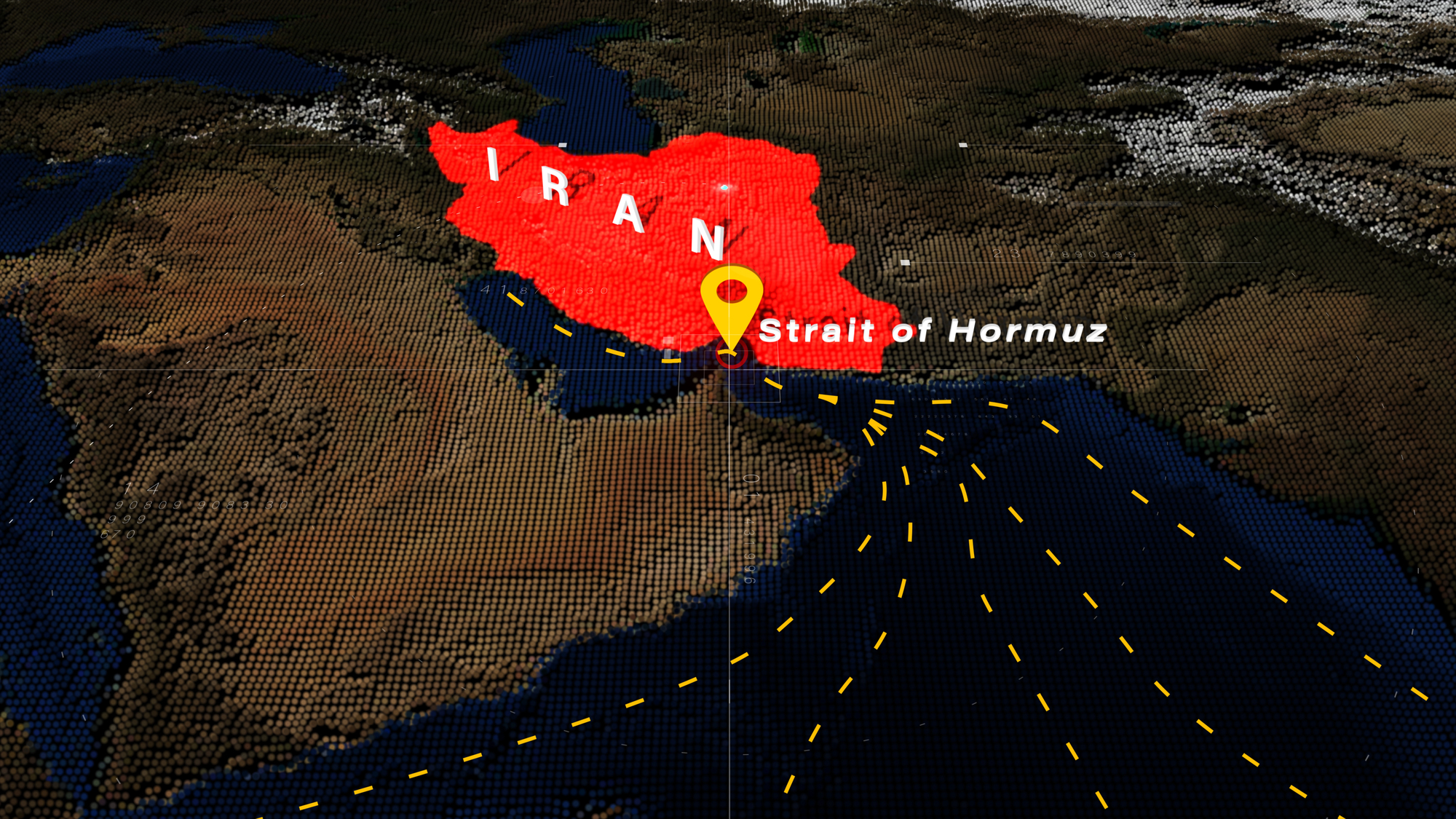
The compensation clash is not simply a dispute over the past. It is tied to the future of the Strait of Hormuz, a narrow maritime passage that has historically handled about 20% of the world’s petroleum liquids consumption. Any prolonged disruption can raise oil prices rapidly, increase shipping insurance costs and place new pressure on inflation in the United States.
Iran’s talks with Oman could produce limited shipping arrangements, but Tehran has made a wider reopening conditional on sanctions relief, security guarantees and reparations. Trump’s counter-demand adds another obstacle to a diplomatic effort already burdened by nearly 6 months of fighting, thousands of deaths and competing claims over who started the conflict and who should pay for it.
The sharpest angle may be the one without a dollar sign. Trump has transformed Iran’s demand for compensation into a public accounting of American casualties stretching from the 1980s to 2026. Whether that strategy produces payments, strengthens Washington’s negotiating position, or pushes both countries further apart will depend on what happens at the bargaining table.
For American families who have already received flag-draped caskets, however, the issue is more than diplomatic theater. Behind the totals of 18 dead, more than 500 wounded, and $37.5 billion spent are individual lives that any settlement cannot restore.