President Donald Trump tried to turn CNN journalist Kaitlan Collins’ professional achievement into a joke about her appearance. Political commentator Brian Tyler Cohen was not amused.
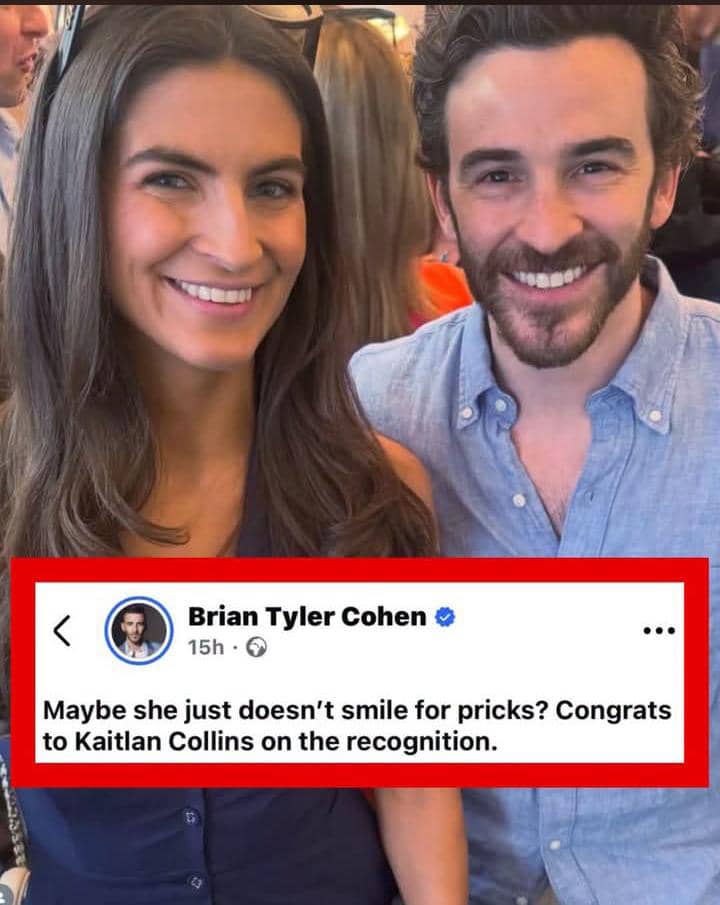
After Trump mocked Collins at the rescheduled White House Correspondents’ Association dinner and repeatedly encouraged her to smile, Cohen responded with a blunt defense that quickly attracted attention online. His message was sharp, profane and difficult to misunderstand: Collins did not owe the president a cheerful expression.
The exchange became another chapter in the long-running conflict between Trump and one of the journalists who regularly questions him. However, Collins’ response made clear that she would rather discuss the reporting that earned her an award than participate in another political insult contest.
Trump turned a journalism award into a personal attack
The confrontation unfolded during the White House Correspondents’ Association dinner on Friday, July 24. The event completed a program originally scheduled for April, when a shooting outside the Washington Hilton forced organizers to interrupt the gathering.
Collins attended the July dinner to receive the Award for Excellence in Presidential News Coverage Under Deadline Pressure in the broadcast category. The White House Correspondents’ Association said the award recognized her reporting on a dramatic 2025 Oval Office meeting involving Trump and Ukrainian President Volodymyr Zelenskyy.
Trump began by acknowledging the award, but the congratulations did not last long.
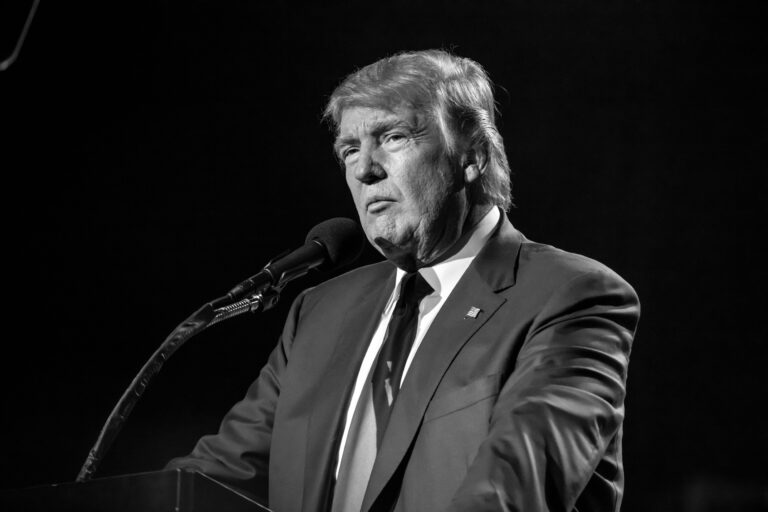
“I want to personally congratulate CNN’s Kaitlan Collins on receiving her award,” Trump said. He then called the honor “fake” and claimed she should not have received it.
The president soon shifted away from Collins’ reporting and began commenting on her appearance.
“She’s a young, attractive woman. She never smiles,” Trump said. “Smile, Kaitlan. Just smile.” He also told her she should be happy because she held a prominent position at CNN, a network he once again described as “fake news.”
Trump continued with a reference comparing Collins to actress and social-media personality Dylan Mulvaney, joking that he initially thought Collins had appeared in a Bud Light promotion. Reports from the event described the room as largely silent during the remarks.
Brian Tyler Cohen delivered a one-line defense
Cohen, a progressive commentator and host known for his political videos and podcast, responded to Trump’s comments with far less ceremony.
“Maybe she just doesn’t smile for pricks?” Cohen wrote in a social-media response reported after the dinner. “Congrats to Kaitlan Collins on the recognition.”
It was not exactly the kind of carefully polished statement that arrives after three meetings with public-relations advisers. That was probably the point.
Cohen’s response directly challenged the idea that Collins should be expected to appear cheerful while covering a president she routinely questions. It also redirected attention toward the reason she was attending the dinner in the first place: professional recognition for her journalism.
CNN offered a more formal defense of its chief White House correspondent.
“Kaitlan Collins is an exceptional, trusted journalist,” the network said, praising the strength, tenacity and skill she brings to her reporting and television work. “We stand by her to the fullest extent.”
CNN anchor Wolf Blitzer, who presented Collins with the award, also praised his colleague. He described her as “a true professional” and “a class act,” adding a playful response to Trump’s complaint about her expression.
“Despite what President Trump keeps saying, she has a truly beautiful smile,” Blitzer said.
Collins kept the focus on questions Trump dislikes
Collins addressed the incident during a July 27 appearance on The Daily Show with Jon Stewart. She said Trump’s personal attack did not surprise her because similar encounters occur regularly during her reporting at the White House.
“What was most surprising to me was the room was filled with a lot of his staffers, his Cabinet, his allies, Republicans in Congress,” Collins said. “It was so quiet in the room during the president’s remarks.”
Rather than trade insults, Collins argued that journalists should keep attention on their work and the answers powerful officials sometimes avoid giving.
“It’s really not about me, and I don’t want it to be about my reaction,” she said. Collins explained that allowing the story to become a personal feud would distract from “the question” and “the non-answers that we get.”
Her social-media response followed the same approach. Collins said the best part of the dinner was reminding people why the First Amendment and “asking uncomfortable questions that people in power don’t like” remain important. She also shared the Eleanor Roosevelt quotation, “No one can make you feel inferior without your consent.”
That contrast shaped the entire episode. Trump questioned the legitimacy of Collins’ award and discussed her facial expression. Collins discussed the reporting behind the award. Cohen, meanwhile, reduced his defense to one memorable sentence.
The smiles may have been optional, but the message was not: Collins intends to keep asking questions, regardless of whether the person answering them appreciates her expression.