For more than three decades, a woman found in a shallow grave in rural Pennsylvania had no public name, no confirmed story, and no clear path back to the family that had been searching for her. She was known only by the place where she was discovered, Christman Jane Doe, a label that kept her case alive but could never capture the life that came before it.
Now we know her name. She was Nuria C. Rodriguez, a 25-year-old mother from the Bronx whose disappearance in the early 1990s left her family with a wound that never closed. Her identification brings a measure of truth after 34 years, but it also raises the question that still sits at the centre of the case: how did a young New York mother end up buried in a field in Berks County, Pennsylvania?
Nuria Rodriguez Was More Than a Cold Case Name
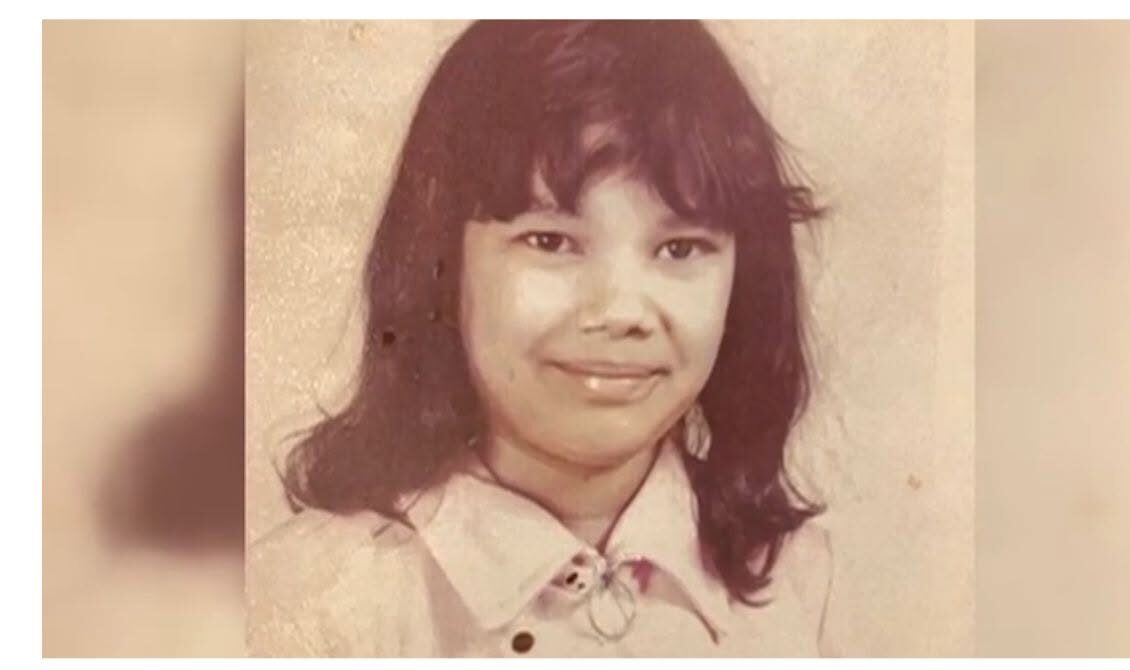
Before she became a forensic mystery, Nuria Rodriguez was a mother, a daughter, a sister, and a woman with a family that expected her to show up. That detail matters because cold cases often begin to sound distant once the years pile up. Names become case numbers. Places become evidence markers. Families become footnotes in official records.
Rodriguez’s loved ones reportedly knew something was wrong when she failed to appear for her son’s birthday. That absence carried a meaning only family could fully understand. A mother missing an important day for her child did not fit the woman they knew. It was not a small delay, a forgotten errand, or a quiet decision to disappear. It was the kind of silence that tells a family to worry before the rest of the world understands why.
Her family searched for answers for years, but the trail did not lead them to a clear conclusion. The public record now connects her disappearance from the Bronx to remains found roughly 130 miles away in Pennsylvania, but the space between those points remains painfully unfinished. We can identify where the mystery began and where the remains were found, but the journey between the two remains under investigation.
The Birthday She Never Reached Became a Warning Sign
The details about her son’s birthday give this case its human centre. Many missing persons stories are remembered through dates, distances, and forensic facts, but this one turns on a family moment. A birthday is supposed to bring noise, cake, photos, and small memories that grow more valuable with time. For Rodriguez’s family, that day became the moment concern hardened into fear.
That absence also helps explain why her family did not simply accept uncertainty. They knew her habits, her love, and her connection to her child. When someone disappears, investigators often rely on those closest to the missing person to explain what behaviour is normal and what behaviour is alarming. In this case, failing to show up for her child was alarming enough to remain part of the story decades later.
We should be careful not to treat that detail as sentimental decoration. It is evidence of attachment. It tells us Rodriguez had a life structured around people who expected her, needed her, and remembered her. It also makes the 34-year delay feel even heavier, because the child whose birthday she missed grew up without the answer that should have come long ago.
The 1992 Discovery in Windsor Township Changed the Case Forever
On June 3, 1992, a farmer working along Christman Road in Windsor Township, Berks County, discovered a human skull on freshly turned soil. Authorities later found partial skeletal remains in a shallow grave. At the time, investigators believed the remains belonged to a woman between 25 and 40 years old and about 5 feet, 3 inches tall.
The location immediately gave the case a haunting rural contrast. Rodriguez was from the Bronx, one of the most densely populated urban areas in the country. Her remains were found in a field in Pennsylvania, far from the rhythms of the city and far from the family still looking for her. That distance became one of the central mysteries of the case.
The condition of the remains limited what investigators could determine. Officials could not establish the exact cause or manner of death. That matters because it keeps the case from being neatly classified in public language. We can say she was found in a shallow grave. We can say the investigation remains active. We cannot responsibly claim what investigators have not confirmed.
Why Christman Jane Doe Stayed Unidentified for Decades
The woman found in the field became known as Christman Jane Doe, a name tied to the road near the discovery site. That temporary name gave investigators and the public a way to refer to her, but it also underscored the failure of available technology at the time. In 1992, investigators did not have the same tools that cold case teams use today.
Authorities created a forensic facial sketch and used DNA analysis, media appeals, and missing person databases to search for a match. Those efforts mattered, but they did not produce a positive identification. A sketch can reach the public, but it depends on recognition. DNA can help, but only when the right comparison exists. A database can hold clues, but only if the missing person and the unidentified remains can be connected through usable records.
For 34 years, the case lived in that gap. Rodriguez’s family was missing a loved one. Pennsylvania authorities had unidentified remains. The two truths existed simultaneously, but they did not meet until modern forensic genetic genealogy helped bridge the gap between them.
Forensic Genetic Genealogy Finally Restored Her Name
The major breakthrough came after the Berks County Coroner’s Office partnered with Parabon NanoLabs in 2024. The goal was to use forensic investigative genealogy, a method that can develop family leads through DNA connections. Over the next two years, investigators worked with genetic genealogy specialists and Pennsylvania State Police to follow those leads.
That work eventually led them to a family in the Bronx. Family cooperation then helped confirm what earlier methods could not. On April 14, 2026, Christman Jane Doe was positively identified as Nuria C. Rodriguez.
The identification does not solve every part of the case, but it changes the ground beneath it. A Jane Doe case begins with the question of identity. Once a person is named, investigators can rebuild the missing person’s life, relationships, last known movements, and possible contacts. We now move from asking who she was to asking what happened to her.
What We Know About the Remains Found in Berks County
Officials have released several important facts about the remains. They were partial skeletal remains. They were found in a shallow grave. Investigators believed they had been buried for at least one year before the 1992 discovery. The condition of the remains prevented authorities from determining the cause and manner of death.
Those limits are central to the story. In many death investigations, the cause of death explains the medical reason a person died, and the manner of death classifies the death as homicide, accident, suicide, natural, or undetermined. In Rodriguez’s case, officials have not announced a definitive cause or manner. That leaves investigators with a difficult challenge, because time, decomposition, and incomplete remains can erase evidence that was once clear.
Still, the circumstances of the discovery continue to raise serious questions. A young mother disappeared from the Bronx. Her remains were later found in a shallow grave in Pennsylvania. Even without a confirmed cause of death, the case remains active because the circumstances surrounding her death have not been fully explained.
The Bronx Connection Gives Investigators a New Direction
Rodriguez’s identification gives investigators a starting point that had been lacking for decades. Her Bronx life may now become the key to understanding how she ended up in Pennsylvania. Investigators can look at who knew her, where she was last seen, what her routines were, and whether anyone from her life had ties to Berks County or the surrounding region.
This does not mean every answer will come quickly. More than three decades have passed. Memories fade. Witnesses move, age, or die. Records from the early 1990s may be incomplete. People who once held critical information may not realise they still know something useful.
That is why public appeals matter in cold cases. A person may remember a conversation, a vehicle, a relationship, a trip, or a strange detail that seemed unimportant at the time. Once a victim has a name, old memories can attach to a real person again. That shift can give investigators a new opening.
This Case Matters Beyond One Identification
The identification of Nuria Rodriguez is part of a larger change in American cold case work. Across the country, forensic genealogy has helped investigators identify people who were once known only as Jane Doe or John Doe. These cases show how science can restore names long after traditional methods fail.
But science does not erase the emotional cost of delay. Rodriguez’s family waited more than 30 years to receive confirmation. Her son grew up without the answers a child deserves. Her loved ones had to carry uncertainty for a generation, and uncertainty can become its own form of grief.
We should also recognise that identification is not the same as justice. Naming Rodriguez is a major step, but not the final one. The investigation still must answer how she died, how she reached Pennsylvania, who may have been involved, and why her family was left searching for so long.
The Public Could Still Hold a Missing Piece
Authorities have asked anyone with information to contact the Pennsylvania State Police. That request is not symbolic. Cold cases often move forward when someone finally shares something that helps investigators piece together a timeline, confirm a relationship, or rule out a false lead.
The detail may seem small. Someone may remember Rodriguez from the Bronx in the early 1990s. Someone may remember a person who travelled between New York and Pennsylvania. Someone may remember a conversation about a missing young mother, a sudden disappearance, or a strange event near Christman Road before the remains were found.
Time can make people assume their information no longer matters. In a case like this, the opposite may be true. A single memory can matter more now because investigators finally know whose life they are trying to reconstruct.
A Name Returned, But a Story Still Unfinished
Nuria Rodriguez is no longer Christman Jane Doe. That change matters. It returns dignity to a woman whose identity was separated from her remains for 34 years. It gives her family the truth they were denied for too long. It also gives the public a name to remember, not just a case label to repeat.
But the most painful questions remain. We still do not know what happened after she disappeared from the Bronx. We still do not know how she ended up in a shallow grave in Windsor Township. We still do not know who may have answers that have stayed hidden for more than three decades.
What we do know is enough to keep the case alive. A 25-year-old mother vanished. Her family knew something was wrong when she missed her child’s birthday. Her remains were found far from home. Now her name has been restored, and the search for the rest of the truth continues.