Thanksgiving has always been about good food, crowded tables, and someone insisting that you have room for another slice of pie. But travel back a few decades, and the holiday menu starts looking a little different. Onions swam in creamy sauces, colorful gelatin molds took center stage, and even steaming mugs of soda appeared.
Some of these dishes have survived generations of changing food trends, while others have become little pieces of American culinary history. They remind us of a time when home cooks turned to handwritten recipe cards, newspaper clippings, and community cookbooks for holiday inspiration.
Whether you’re planning a retro Thanksgiving dinner or simply curious about what previous generations enjoyed, these six vintage recipes deserve another look.
Oyster Stuffing
If you think stuffing should contain nothing more adventurous than bread, butter, and herbs, your great-grandparents might disagree.
Oysters have been part of American poultry preparations for centuries. Amelia Simmons’s 1796 cookbook, American Cookery, included instructions for filling poultry with oysters. By 1910, oyster stuffing had found its way into published Thanksgiving cooking instructions.
The revised 1910 edition of The Boston Cooking-School Cook Book by Fannie Farmer featured a surprisingly simple version made with stale bread crumbs, melted butter, onion juice, oysters, salt, and pepper.
The oysters give the bread a distinctive savory, slightly briny flavor that sets it apart from traditional stuffing.
Although oysters might seem like a fancy addition today, they were once an affordable ingredient for many Americans. Oyster dressing remains a Thanksgiving tradition in the Chesapeake Bay region, where seafood has long influenced local cooking.
If your family loves seafood, this might be the perfect vintage addition to your holiday spread.
Hot Dr Pepper
Before you reach for another cup of hot chocolate, consider what holiday party hosts served in the late 1950s and 1960s: hot soda.
According to the Dr Pepper Museum, company president Wesby R. Parker developed Hot Dr Pepper in 1958 after experimenting with ways to serve the soft drink during colder weather.
The recipe couldn’t be much simpler. Heat Dr Pepper to approximately 180 degrees Fahrenheit and pour it over a thin slice of lemon.
That’s it. No cinnamon sticks, fancy syrups, or complicated ingredients.
The warm beverage became a holiday favorite that remained popular into the 1970s. Some people have even compared its flavor to tea.
Although it wasn’t necessarily a Thanksgiving staple, it fits beautifully into a vintage holiday gathering. Serve it in mugs while guests wait for dinner, and enjoy watching their reactions when they discover what’s inside.
Creamed Onions
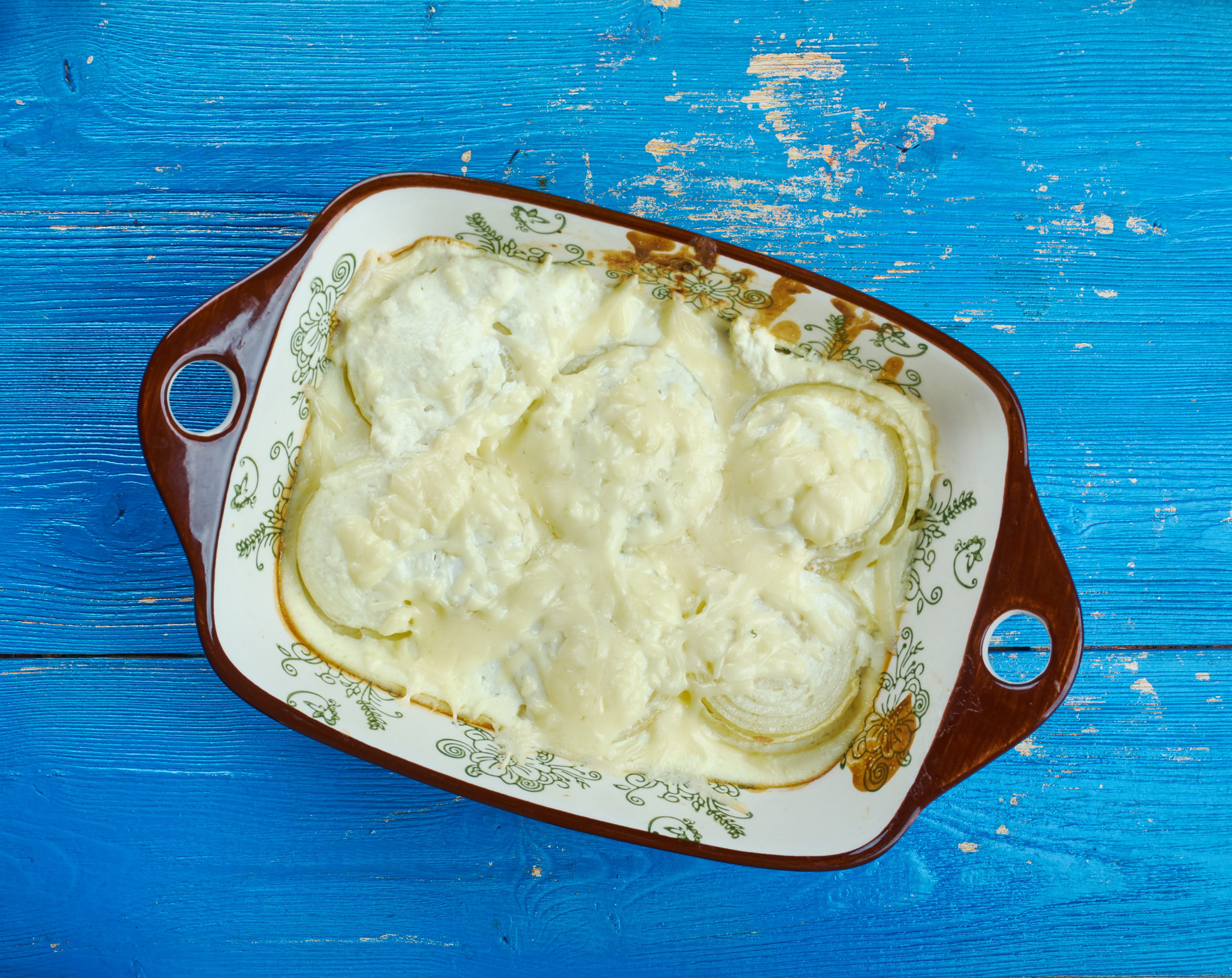
Onions rarely get their own moment of glory at Thanksgiving. They’re usually tucked into stuffing, mixed into casseroles, or hidden somewhere in the gravy.
However, early twentieth-century cooks gave them an entire side dish.
Olive Hyde Foster included creamed onions in her 1910 Thanksgiving menu, while Elizabeth O. Hiller provided a detailed recipe in her 1913 cookbook, Fifty-Two Sunday Dinners.
Hiller’s version called for 12 medium-sized onions, butter, flour, milk or thin cream, parsley, salt, and pepper.
The onions were boiled until tender, then covered in a smooth, creamy white sauce. Unlike modern versions that frequently feature pearl onions, this historical recipe used larger onions.
The result is a comforting side dish with a mellow onion flavor and a rich, silky sauce.
For more texture, Hiller also offered an au gratin variation featuring buttered cracker crumbs browned over the creamy onions.
Mincemeat Pie
Mincemeat pie has an unusual name for good reason: it really did contain meat.
Amelia Simmons’s American Cookery, published in 1796, featured a minced beef pie containing cooked beef, apples, beef suet, raisins, spices, and wine or sweet cider.
It combined savory and sweet ingredients in a way that might seem unfamiliar to modern dessert lovers.
Mince pie also appeared alongside apple and pumpkin pies on the Thanksgiving menu at Boston’s Hotel Vendome in 1894. Early twentieth-century household cookbooks continued featuring it in their holiday menus.
Over time, meatless versions became part of the mincemeat tradition, with dried fruits, apples, and warm spices taking the spotlight.
If you’re looking for something different from the usual pumpkin pie, a fruit-based mincemeat pie offers plenty of old-fashioned holiday charm without putting beef on the dessert table.
Cranberry Gelatin Salad
Few dishes capture the personality of vintage American entertaining quite like a brightly colored gelatin mold.
While molded salads are often associated with the 1950s and 1960s, cranberry gelatin salad appeared considerably earlier.
The Library of Congress highlights a cranberry salad recipe published in Washington’s Evening Star on November 24, 1931. It was served on lettuce with mayonnaise.
Ocean Spray also published a recipe called Cranberry Jewel Salad, which combined raspberry-flavored gelatin, cranberry sauce, water, and orange.
The mixture was refrigerated until firm, then served in lettuce cups, creating a colorful mix of sweet and tart flavors.
One practical advantage of this vintage dish is that you can prepare it ahead without sacrificing precious oven space.
And let’s face it: a trembling cranberry mold would certainly make an entertaining conversation starter at Thanksgiving dinner.
Candied Sweet Potatoes With Marshmallows
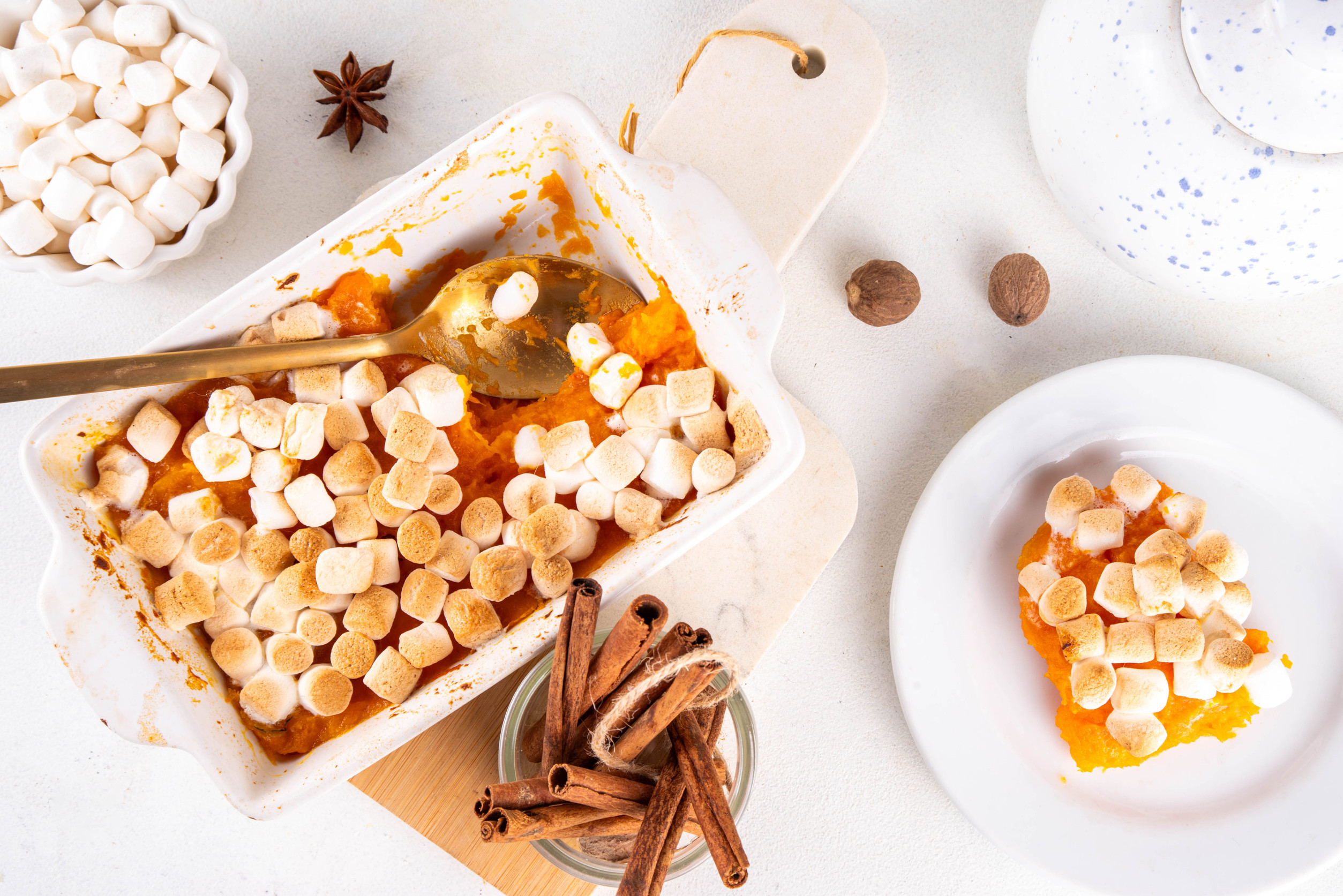
Thanksgiving is one of those occasions when something covered in melted marshmallows can somehow qualify as a vegetable side dish.
Sweet potatoes already appeared in American cookbooks before marshmallows entered the equation. Hiller’s 1913 recipe for glazed sweet potatoes used sugar, butter, and water to create a sweet syrup.
According to Smithsonian Magazine, an Angelus Marshmallows promotional booklet helped popularize the marshmallow-topped version in 1917, although earlier recipes have also been reported.
The dish can feature sliced sweet potatoes coated in buttery syrup or mashed sweet potatoes baked beneath a fluffy marshmallow topping.
Once the marshmallows melt and turn golden brown, the casserole becomes an irresistible combination of soft potatoes and sticky sweetness.
Unlike several other vintage holiday dishes, this one remains a familiar Thanksgiving favorite, particularly in Southern cooking.
Bringing a Little History Back to Thanksgiving
You don’t need to recreate an entire century-old Thanksgiving menu to enjoy the flavors of decades past. Start with creamy onions, experiment with oyster stuffing, or surprise your guests with Hot Dr Pepper.
After all, today’s holiday favorites were once somebody’s new recipe. And who knows? Something pulled from a dusty old cookbook might become the dish your family requests every Thanksgiving.