By the third week of a busy month, dinner can slide into whatever is quickest, eaten in shifts between practices and homework. Then someone mentions a plate that only comes out on birthdays, and the whole table perks up.
Two state university extension programs have ideas for exactly that. North Dakota State University Extension and Utah State University Extension both publish guides to family meal traditions, and 8 of their suggestions stand out, from a red plate for birthdays to Taco Tuesday and reunion food committees. The NDSU publication was revised in December 2021, and the Utah State pages carry no date, so the advice reads as evergreen guidance rather than news.

Taco Tuesday on the Same Night Each Week
The NDSU Extension guide, Make Family Meals a Tradition, suggests a repeat meal, such as tacos twice a month on the same weeknight. The idea is that a fixed night takes the guesswork out of planning and gives children something to look forward to.
Utah State’s pages also list Taco Tuesday. The name has a long public life, and the Wikipedia entry on Taco Tuesday covers how the phrase caught on.
A Red Plate for Birthdays and Milestones
NDSU describes a milestone ritual in which a family honors birthdays and accomplishments by serving the person of the day on a special red plate. It works at any age, since the plate says the day is special before anyone speaks.
A single plate also becomes a keepsake, and the same spirit shows up in Frenz Hub’s 13 birthday party activities for kids for an at-home celebration. Frenz Hub’s list of odd American traditions shows how many small family rituals are only a plate or a phrase long.
A Weekly One-on-One Breakfast
The NDSU guide gives the example of a mother and daughter who share a favorite breakfast on the back porch each week. Utah State makes a similar suggestion for families whose evenings do not work: a weekend breakfast can serve as the shared meal.
For a set of ideas on equipment, Frenz Hub’s roundup of breakfast station top picks covers the countertop side of the morning.
Celebration Meals for the Big Days
NDSU suggests marking birthdays, cultural celebrations, family reunions, Mother’s or Father’s Day, graduations, holidays and weddings with special foods. A dish that appears only for one occasion, like a certain cake or casserole, turns an ordinary day into a memory.
The same thought runs through a sister site’s piece on people who rewatch the same movie together every year, where repetition is the point.

A Reunion Food Committee
For big gatherings, NDSU recommends a small planning committee that chooses a simple menu, enlists helpers and delegates. Cousins who live nearby cook the hot dishes, while relatives who travel bring bread, crackers or cookies.
The Wikipedia article on family reunions describes the gatherings themselves. A sister site’s look at 6 things families quietly argue about at Thanksgiving dinner is a reminder of why a plan helps.
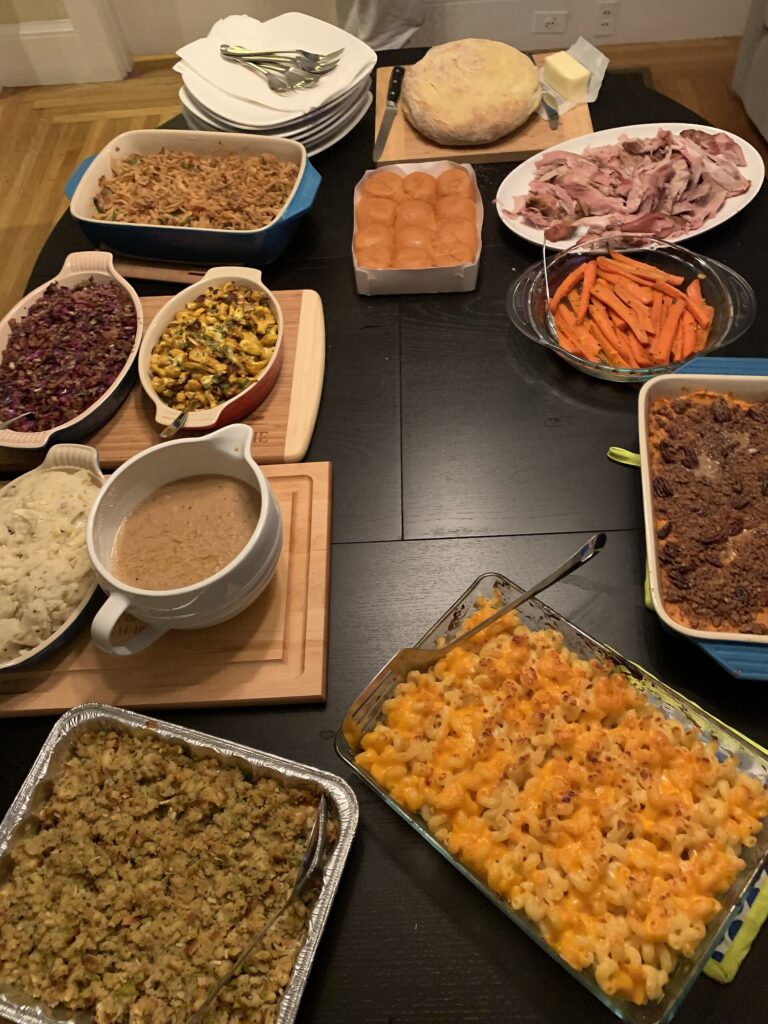
A short plan keeps things simple: put the reunion menu on one page, list who brings what, and send it to everyone a few weeks ahead. That way a table of hot dishes and a basket of rolls come together without any last-minute scramble.
Double Batches to Freeze and Share
NDSU also suggests cooking double batches of casseroles or chili, freezing meal-sized portions and sharing some with someone in need. The result is a ready dinner for a hectic night and a thoughtful gift for a neighbor or relative who could use one. The guide’s own examples are browning extra ground beef or doubling a casserole or chili recipe, then freezing the extra in meal-sized containers to heat later.
One Shared Sunday Dinner a Week
Utah State’s Make Family Meals a Tradition page advises starting small with one shared Sunday dinner a week. It recommends a consistent mealtime, menus planned ahead, a table with no TV or phones, shared cooking and cleanup, and saving discipline and other tough topics for another time.
The Wikipedia page on the Sunday roast describes a traditional weekly Sunday meal.
The NDSU guide adds a handy planning checklist for regular family meals: decide who plans and prepares the food, when it is served, who attends, how family members are involved, what food is served, and what topics or activities go with it. Answering those six questions once makes every later dinner easier to set up.
Theme Nights Anyone Can Run
Utah State’s family meal theme nights sheet lists Breakfast for Dinner, Saturday Stir Fry, Taco Tuesday and a When in Rome Italian night. Theme mornings include Dinner for Breakfast and an Oatmeal Extravaganza.
Each theme gives a family a quick answer to the nightly question of what is for dinner. The sheet also suggests picnic days, indoors or out, and a menu built around a favorite book or movie.
A fixed meal also keeps weeknight shopping simple, since a repeat dinner means the same short grocery list. Families who pair a theme night with a shared task, such as one child setting the table and another choosing the music, get the tradition and the teamwork in one evening.
None of the 8 needs special equipment, and families can start with one. A red plate, a repeat taco night or a single Sunday dinner is enough to begin, and more can be added as the habit sticks.
This article was produced with AI assistance and edited for accuracy against the sources linked above.
Image: George Ho – CC BY-SA 4.0/Wikimedia Commons