The peanut butter jar usually waits beside the bread. Tonight, give it a different assignment.
Whisked with soy sauce, honey, sriracha, and sesame oil, it becomes a ramen sauce. Reserved cooking water loosens the mixture, while scallions, chopped peanuts and lime finish the bowl.
Something is appealing about a dinner built around ingredients that already feel familiar. The noodles are straightforward. The sauce comes together in a bowl. The finishing touches can be set out while the water heats.
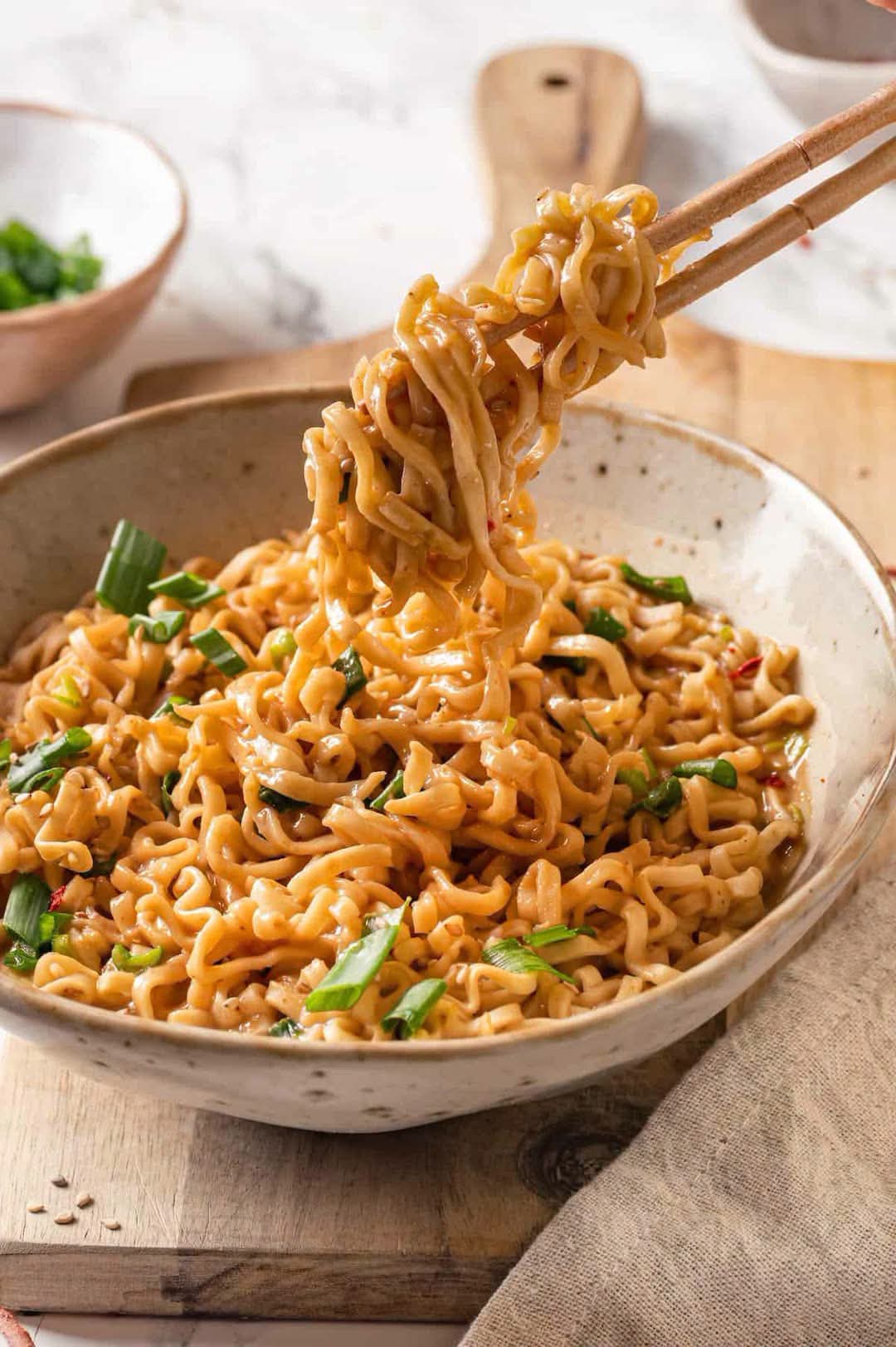
Peanut butter ramen can go in two directions: a soup-style preparation that keeps the broth, or drained noodles coated in sauce. Both appear in published recipes. This version takes the saucy route, with clear measurements and a method that leaves room to adjust the consistency.
Choose Your Bowl Before You Boil
Before opening the packet, decide what you want to eat.
For a broth-based bowl, Skippy’s peanut butter ramen recipe begins with ramen prepared according to package instructions. Peanut butter, soy sauce, sriracha, and vegetables are then added to the soup.
The sauce-based method below works differently. The seasoning packets stay out, the noodles are drained, and a separate peanut mixture provides the coating.
Neither approach needs to borrow every instruction from the other. Keeping the methods separate makes the cooking easier to follow.
If you want noodles rather than soup, prepare a large mixing bowl alongside the pot. That bowl will handle both the sauce and the final toss.
What You Need for Creamy Peanut Butter Ramen
This preparation follows Allrecipes’ published peanut butter ramen recipe, which lists three servings.
Gather:
- Two 3-ounce packages of instant ramen noodles, seasoning packets discarded.
- One-quarter cup creamy peanut butter.
- Three tablespoons reduced-sodium soy sauce.
- One and one-half tablespoons honey.
- One tablespoon sriracha, or to taste.
- Two teaspoons sesame oil.
- Two green onions, thinly sliced.
- Two tablespoons chopped peanuts.
- Three lime wedges.
Reserve one-half cup of noodle-cooking water. Keep a cup or other suitable container beside the stove so you don’t lose this step when it is time to drain.
Measure the sauce ingredients before starting. Slice the green onions, chop the peanuts, and set the lime wedges aside. The final assembly is easier when the toppings are waiting for the noodles, rather than the other way around.
Give the Sauce a Head Start
Put the peanut butter, soy sauce, honey, sriracha, and sesame oil in the mixing bowl. Whisk until smooth.
The published recipe allows the sriracha to be adjusted to taste. If you prefer less heat, start with less rather than treating the full tablespoon as compulsory.
Use a bowl roomy enough to hold the cooked noodles. Mixing in a small dish and transferring later adds an extra step without improving the method.
There is no separate saucepan for this sauce. Keep the bowl ready beside the cooking area, with a tossing utensil close at hand.
Once the mixture is combined, turn your attention to the pot. The sauce can wait while the noodles cook; having it ready means you will not have to pause after draining.
Cook the Noodles and Save the Water
Bring a large pot of water to a boil. Add the ramen and cook to your preferred doneness. Allrecipes recommends 3 to 5 minutes.
Before draining, scoop out one-half cup of the cooking water.
It is a small task, but it gives you control over the next step. The sauce recipe uses that liquid to adjust the consistency, so save it before emptying the pot.
Drain the noodles well, then add them immediately to the peanut mixture. Toss until the sauce coats the strands.
Work through the whole bowl rather than stirring only the top. The goal is to distribute the mixture evenly, not leave a thick patch under the noodles.
At this point, you have the basic dish. Next, decide how loose you want the coating.
Related:10 Delicious Cheese Types Perfect for Boards and Cooking
Let the Sauce Find Its Consistency
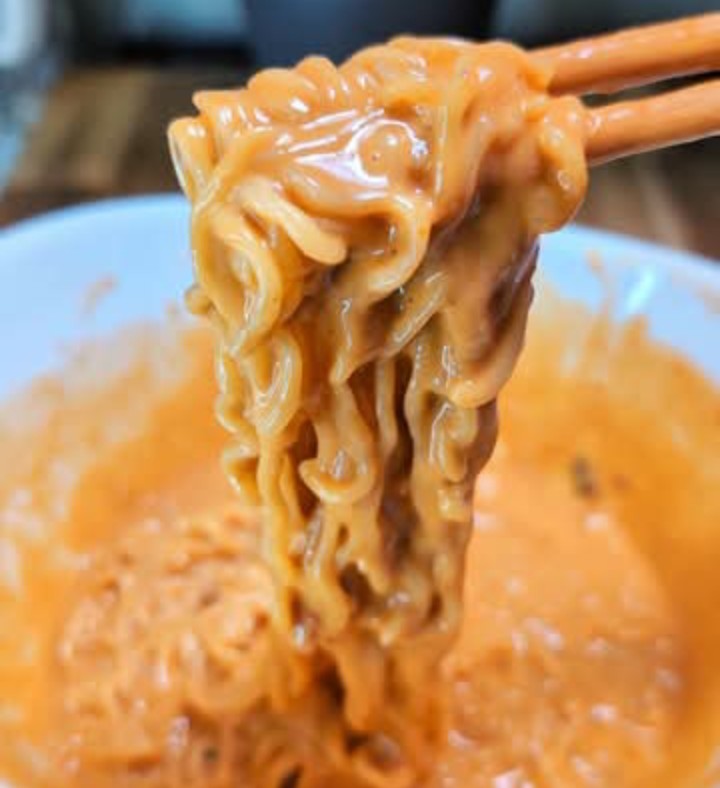
If you prefer a thinner sauce, add the reserved cooking water one tablespoon at a time, tossing between additions.
This gradual approach helps because you can stop when the noodles are to your liking. Reserving one-half cup does not mean the entire amount must go into dinner.
For this preparation, aim for coated noodles rather than a bowl of broth. If you want the soup version, start with that method instead of trying to transform the finished sauce recipe by adding a large amount of liquid.
Once the coating is where you want it, finish with the green onions and chopped peanuts. Serve the lime wedges alongside, as the published method directs.
Let each person decide what to do with their wedge. The finishing step does not need to become another round of measuring.
Why the Seasoning Packet Stays Out
The packets are not forgotten. They are intentionally omitted from this version.
Allrecipes directs cooks to discard them because its noodles are paired with a separately prepared sauce containing soy sauce and other seasonings. Skippy’s broth-based recipe begins with ramen made according to package directions.
That difference explains why online instructions may seem to conflict. One recipe builds on prepared soup. Another uses the noodles without the packet.
Follow the method for the bowl you are making. Adding the full packet to this measured sauce would create a different preparation from the one described here.
You can experiment later, but the first bowl is easier to understand when the recipe doesn’t change halfway through.
Give the Finish a Little Personality
The measured recipe finishes with peanuts, green onions, and lime. Other published preparations take different directions.
Maruchan’s Peanut Butter Dan Dan Noodles combines peanut butter with chili crisp and honey, using spicy miso ramen. Peanuts and green onions finish that bowl.
Skippy’s soup-style recipe includes vegetables such as carrots, pea pods, and red pepper strips.
Those are alternatives, not a shopping list for one overloaded dinner. Make the measured version first, then decide which direction interests you next time.
A bowl with every possible topping is not automatically more enjoyable than one with a few considered additions. Keep the noodles and sauce at the center.
An Ordinary Jar Gets Another Assignment
Peanut butter ramen does not need a complicated backstory to earn a place in the dinner rotation. Published recipes already show how the same pantry pairing can become soup or saucy noodles.
The first bowl gives you a starting point. Next time, you might choose less sriracha, a thinner coating, or another published variation.
That is the appeal: familiar ingredients, a manageable sequence, and a meal you can adjust thoughtfully. Which ingredient already sitting in your cupboard deserves a second look?